

Mooooooooooooooood
Is design discourse the new growth hack?
Earlier this month, Michael Roberson posted a clip of his tool, Mooodboard, alongside a provocation: “if brand auditing/faster design research is threatening your employment status, you’re ngmi” He said he’d been catching flak from designer Elizabeth Goodspeed, among others, for “automating creativity.”

Elizabeth pushed back via thread, rejecting the idea that she’d been lobbing criticism at the 21-year-old founder. She shared how those same “tedious” brand audits had been formative in developing her visual literacy and design perspective. The exchange quickly racked up more than 30,000 views, becoming the latest skirmish in design’s ongoing relationship with AI.
But something else was happening, too. Because, as Michael later told me, the entire episode had been engineered as ragebait, a calculated strategy to generate attention.
The conversation was the product. And it worked.
U mad?
For those lucky enough to be unfamiliar, ragebait is content designed not to inform or persuade, but to provoke. It trades nuance for virality, appealing to algorithms that reward outrage with visibility. The more inflammatory the take, the more traction it gets. What began as trolling in early forums has matured into a profit-driven tactic used by creators, media outlets, and brands to farm engagement.
When I caught up with Michael, he was wrapping up a UX design internship at Amazon and had convinced two friends to join him in Seattle to work on Mooodboard. He documented all this on his Instagram.
“It’s my first time on Twitter,” he said. “I’m more used to Instagram.” To get his bearings, he’s leaned on advice from friends like Roy Lee, founder of Cluely.
“I actually sent the post to Roy before posting it,” Michael told me. “I said, “Is this good rage bait? Will this get engagement?” And he was like, “yeah, do it.”
So, did it work? The tweet earned 30,000 views, but only about 20 likes. “That ratio was pretty jarring,” he said. Still, the strategy felt legible. “When I post things like, ‘if you don’t do X, you’re not going to make it,’ obviously, I don’t think that. These tools aren’t really capable of replacing designers just yet. It’s really easy to get views baiting and fear-mongering.”
When I mentioned the possibility to Elizabeth during our call, it hadn’t occurred to her: “I am earnest to a fault,” she said. “If someone would do that, it makes me upset, because I really care about this stuff. This is not just my career; I teach this, I live it. It bums me out in the same way you’re not gonna make it bums me out, because that’s not how I think humans should relate to each other. That’s not a world I want to live in.”
The friction is the point
Strip away the outrage, and you’re left with a genuine philosophical divide about the role of friction in creative work.
The case for speed is straightforward. Michael’s experience mirrors that of many young designers: brand audits felt like busywork during his Landor internship. “That process was super boring,” he told me. “I wasn’t learning much by copy-pasting things into a deck.” His tool promises to cut through that inefficiency, letting teams reach visual consensus faster and spend more time on execution.
This aligns with Silicon Valley’s broader efficiency doctrine, the belief that removing barriers democratizes access and accelerates innovation. In that context, friction is often just gatekeeping dressed up as process. Why shouldn’t more people have access to good design research? Why privilege slow taste-building over smart tool use?
“I don’t think reducing friction makes research any less rigorous. Research shouldn’t be gatekept,” Michael said. “Design is inherently derivative. It’s all remixing other people’s thinking, connecting ideas in new ways. Everyone steals. Tools like Mooodboard just help people steal better.”
Elizabeth sees it differently. “What’s interesting to me,” Elizabeth noted, “is how many people are now entering this space without a personal understanding of how the process of designing something actually works.” For her, that grunt work was formative. “The friction is the process,” she explained. “That’s how you form your point of view. You can’t just slap seven images on a board. You’re forced to think: What’s relevant? How do I organize this and communicate it clearly?”
Automating creativity
Michael’s claim that Mooodboard was under fire for “automating creativity away” was something of a strawman. If you disagreed, maybe you just feared the future. Maybe you weren’t gonna make it.
For Elizabeth, that framing missed the point: “Automation and creativity aren’t even on the same plane,” she said. “They don’t cancel each other out. You can automate something in a creative way. And you can also make something slowly, with tons of friction, that isn’t creative at all.” Like speed and craft, they’re not opposites, and the inverse is not automatically better.
Her concern is less with tools, more the uncritical adoption of efficiency as the highest good. “I’m not making a moral judgment about what’s good or bad to automate,” she said. “I’m just saying there are downstream effects, whether we name them or not.” She pointed to architecture as a cautionary tale: entire building techniques lost not because the tools were bad, but because we stopped asking what they replaced. “There are types of buildings we literally don’t know how to make anymore.”
Design as a problem to solve
As design has gained visibility—through billion-dollar IPOs, glossy launches, and viral teardowns—it’s begun to attract new scrutiny. No longer treated as a craft or discipline, design is increasingly framed as a bottleneck. A cost center. A friction point to eliminate.
Michael sees that shift. “We’re scratching the surface and what LLMs and design can do,” he said. “It’s going to look strange ten years from now.” He cited a piece of Figma lore: a comment that said if Figma was the future of design, they’d change careers.
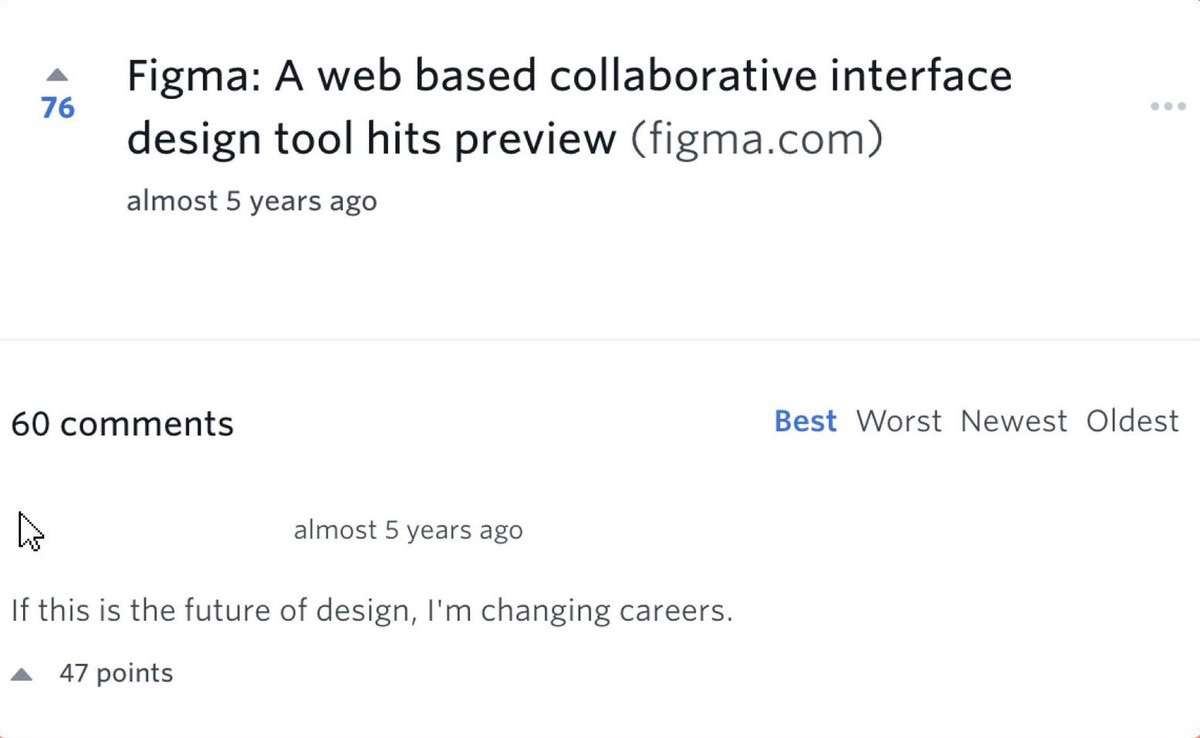
For him, Mooodboard is just the start. “I don’t think Mooodboard will stay exclusive to design research,” he said. “It’ll be one of the best places to get ideas—and to find high-quality work and see where it’s coming from.” They’re currently building an attribution feature, so users can trace visual lineage.
Michael says that his main focus right now is making sure the product is genuinely useful. “You can buy billboards in Times Square, you can rent a Ferrari, but if the product’s not good, people just churn immediately,” he said.
The debased market of attention
In June, Antimetal CEO Matt Parkhurst tweeted: “Attention as currency is debasing the market.” He was talking about the spectacle and the economy that now rewards it.
Roy from Cluely has turned attention into a growth strategy. Expelled from Harvard and Columbia, he went viral for building tools to cheat coding interviews, then bragging about rejecting offers from Amazon and Meta. From there: a Times Square billboard, a million-dollar merch drop, a fursuit.

Michael isn’t Roy. But he’s navigating the same terrain, one where provocation is just good marketing, and a startup is only as strong as its signal. He’s a college student trying to launch a project in a world where visibility can make or break you. And in that world, attention is the moat. If a tweet stirs up designers and sends a few thousand to your site, hey, that’s traction.
When you’re young, online, and trying to get a project off the ground, caring about distribution is the difference between a hobby and a company. But there’s a cost. The more you perform expertise, the less you develop it. The more you optimize for engagement, the more you risk flattening what gave the work meaning in the first place. In a world where being known matters more than knowing, the incentives point toward performance over practice. And we all become performers in someone else’s growth strategy.
This isn’t unique to AI tools or design. Across industries, we’re seeing the rise of what we might call “expertise theater,” the careful curation of knowledge and opinion designed more for audience than understanding. Job listings now include roles like “Head of CEO Content” and “Vibe Tweeter.” Founders are coached not just on product development, but on how to manufacture moments that capture attention.
Operating conditions
This was never really about mood boards or brand audits. It’s about the design culture we’re building. As Elizabeth put it, AI is a symptom, not the disease. “We’ve optimized the design industry for speed, scale, and efficiency—and AI just fits neatly into that system. If AI disappeared tomorrow, we’d still be dealing with the same pressures.”
We need space for craft and perspective to develop slowly. We also need tools that lower barriers while raising the ceiling. But we have to be clear-eyed about what we’re optimizing for and what we might be trading away—be that hard-earned knowledge or trust and credibility with a close-knit community of designers.
Even if Michael’s provocation was manufactured, the underlying tensions are real. How we resolve them will shape not just the tools we use, but the kind of designers we become.
Because when distribution matters more than craft, you don’t become a designer by designing. You become a designer by being known as one. That’s the game now.
—Carly
"You become a designer by being known as one" oof that hits home.
going to be a interesting experiment to see who outsources too much to these tools at the expense of building their own intuition (aka “speed”). if you don’t practice enough design, and train those muscles to trust your intuition when you can actually feel something is good, you won’t know how to use it.